Trading around a full-time job, what actually works
Swing trading on daily charts is the approach that fits employment: decisions are made once, in advance, and orders execute without you. The workable loop is one planning session a week, conditional orders carrying the plan, and alerts replacing screen time. What does not work is compressing day-trading into lunch breaks, that is competing against full-time professionals in stolen minutes, on their terms.
Design the system around your absence
The employed trader’s advantage is being structurally unable to overtrade, if the system is built to exploit that. Everything decided at the weekend (the Sunday routine), everything executed by conditional orders: stop-entries for triggers, attached stop-losses for risk, limits for targets. Your job becomes reviewing outcomes, not watching prices.
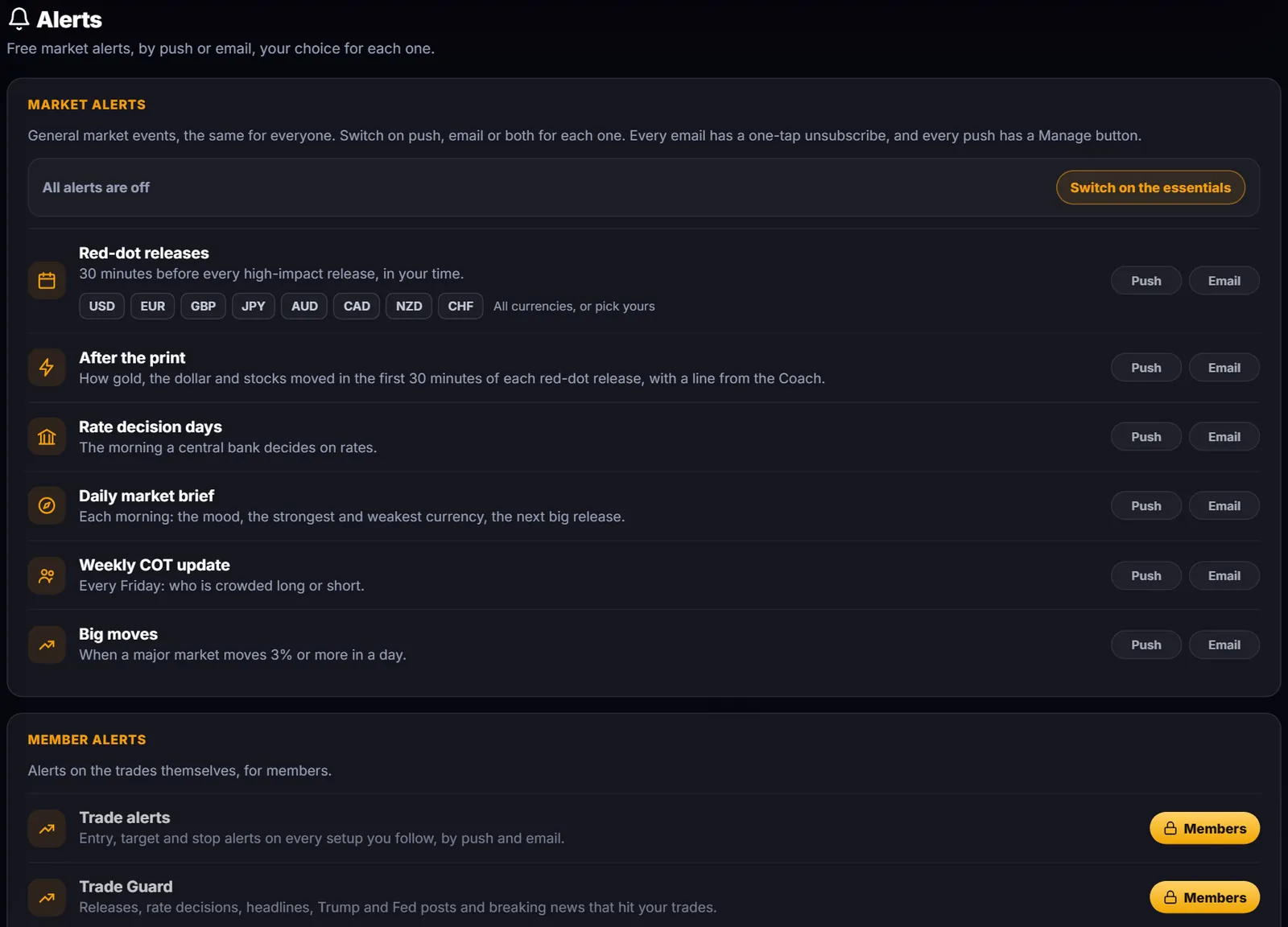
Alerts are the bridge for the in-between: a price crossing a level you care about should come to your phone, and the correct response is usually nothing, the order is already working. Checking positions at lunch is fine; deciding at lunch is where plans die.
Realistic cadence and the arithmetic of patience
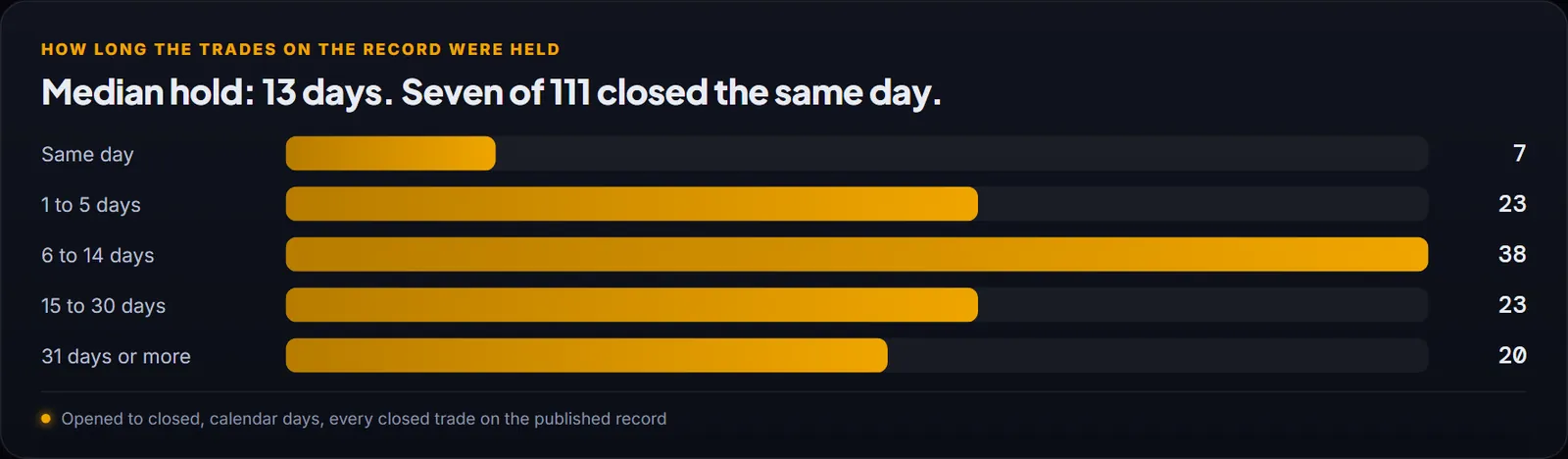
A daily-chart swing method does not generate constant action. The desk’s published record closed 118 trades in about nine months, roughly two a week reaching completion, wins and losses included, from a watchlist far larger. Weeks with nothing triggering are the system working, not failing.
The compounding maths is kinder than the boredom suggests: at the record’s expectancy of about +0.43R per closed trade, a patient 1%-risk process grinds forward without a single heroic month. The people this fails are those who need the market to be exciting, which employment, usefully, beats out of you.
The traps, named
The day-trading rabbit hole: short timeframes demand presence you cannot give; the mismatch shows up as chasing fills and revenge trades at 2pm meetings. The approach comparison treats this honestly. Phone-tinkering: moving stops and taking "quick profits" from a corridor is improvising, not managing. Overnight leverage: gaps do not respect margin, size as if you cannot react, because you cannot. The boring version survives; that is the entire pitch.
This week’s setups are already mapped
Every Sunday before the open: analysed swing setups across stocks, forex and crypto with the exact entry, stop and target, plus the live dashboard, three letters a week, the TradingView indicator suite and the masterclass library.
Get this week’s setups →118 trades · 60 losers shown · +50.5R see the full record →
FAQ
How much time does swing trading actually need?
With a prepared plan: 20–40 minutes at the weekend plus a few minutes on alert days. Building the plan yourself from scratch adds one to two hours of scanning, the part a research service compresses.
Do I need to trade the market open?
No. Conditional orders handle triggers whenever they occur. If a method requires you personally present at 9:30, it is a day-trading method wearing swing clothes.
Can a small account make this worthwhile?
The skills compound before the money does. At 1% risk per trade the early profits are small in cash terms, the asset being built is a verified R-multiple track record and process, which scales to any account size later. Rushing that with size is how small accounts stay small.
What about prop firm challenges alongside a job?
The same weekly process fits evaluation accounts, with extra attention to their daily-loss rules, one gap through a stop can breach a limit even when the trade idea was fine. Sizing must respect the firm’s rules, not just your own R.